

The Counterfeit Self
The Ancient Lie Behind the Modern Identity Crisis

When I was a kid, my parents moved us to a small town in Missouri so my mom could complete her dermatology residency. The town wasn’t much: a town square, Hastings (shoutout if anyone remembers this store), Walmart, and not a whole lot else. The only memorable thing about the town square was a massive speed bump caused by an aging brick road that, if you weren’t paying attention, could rip off your bumper.
The house my parents built was on a slanted hill outside of town. The hill ran down into a thicket of trees and beyond that, a creek bed that was dried up half the year. To most it would seem like a rough patch of land, but to me, it was a place to explore. I was really into Jurassic Park at the time, so I went down to the creek bed and looked for fossils. One day, a glitter caught my young eyes. Gold. This was it, I told my eight-year-old self. I’m rich. I can buy all the Pokémon cards I can afford — a staggering show of currency to an eight-year-old.
Well, it was around that time that I learned about fool’s gold. A counterfeit that tricks many a young kid. It looks so much like the real thing to young eyes, and yet it’s not. It’s fake.
So often the counterfeit looks like the real thing. And to young eyes, it can even feel like the real thing. That’s what makes counterfeits so dangerous.
Satan Never Creates, He Only Counterfeits
In City of God, Augustine writes that “evil has no positive nature; but the loss of good has received the name ‘evil.’” Evil, in Augustine’s account, is not a thing unto itself. Augustine holds to privatio boni, or that evil has no independent existence, no creative power, no originating force (privation theory). It is parasitic. A shadow. A distortion. A warped and twisted version of something that was, before the corruption, genuinely good.
Augustine was responding to the Manicheans. Here’s Peter Brown:
“The Manichaean answer to the problem of evil . . . was simple and drastic. . . . They were dualists: so convinced were they that evil could not come from a good God, that they believed that it came from an invasion of the good . . . by a hostile force of evil, equal in power, eternal, totally separate.”
Augustine sought to address the question of evil without falling into this dualistic notion. I’m not going to push a position, but I do find Augustine helpful here, particularly on the incomprehensibility of evil.
In my simpleton language, I’ll put it this way for the purpose of this piece. Satan, the master of lies, never creates. He counterfeits. He promises you can be something more, but he delivers death and misery.
This is perhaps the most clarifying lens through which to understand temptation and the self, both ancient and modern. It helps us see some of the cultural issues we are facing in a different light. Like a kid finding fool’s gold, we think we’ve found the thing that will bring us joy and completion, but it only leaves us empty, with a worthless rock in our pocket.
The Pattern of the Counterfeit
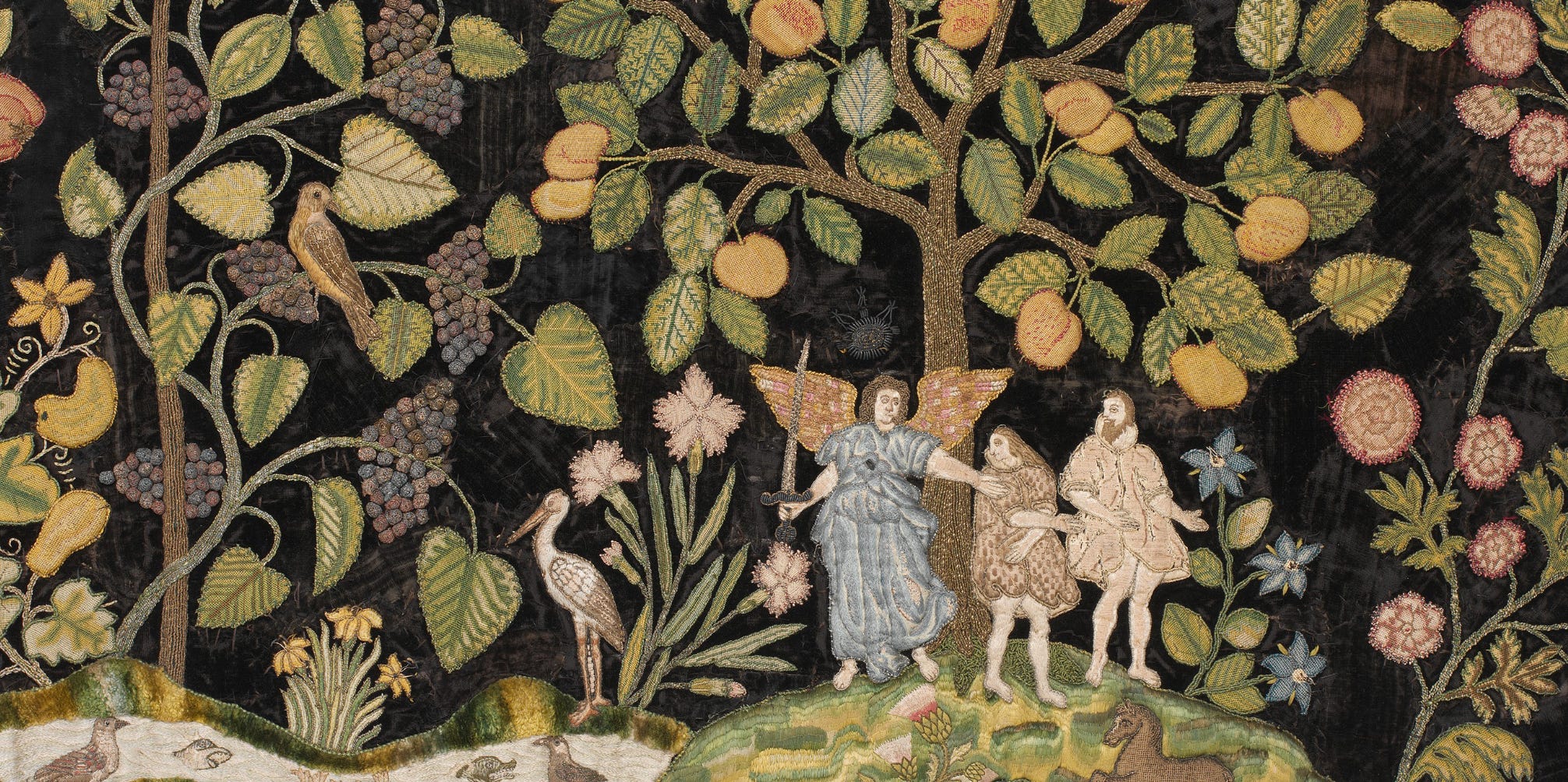
When the serpent approaches Eve in the garden, his offer seems almost generous: “You will be like God.” It may help to expand on this a bit. Adam and Eve were in the garden with God, in need of nothing. They were in active, fully satisfying union with the living God.
Then the serpent offers them something.
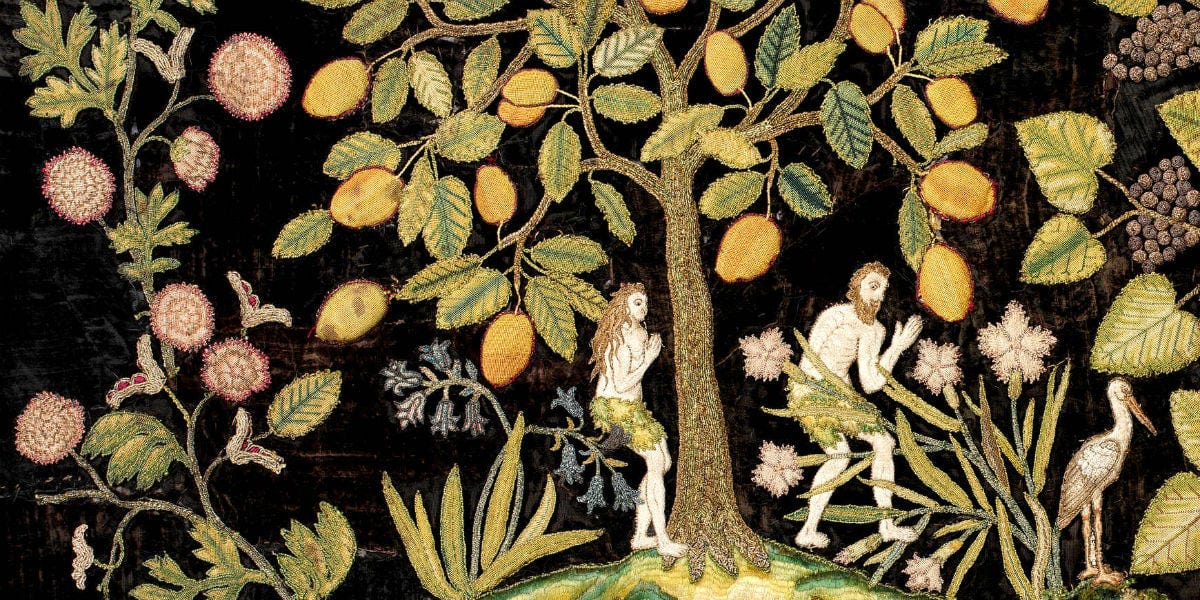
For context, God caused two trees to spring forth from the ground. The tree of life was pleasant to the sight and good for food. The second, the tree of the knowledge of good and evil, came with a prohibition. The serpent doesn’t tempt Eve with the tree of life, because it had no prohibition. It was made to be enjoyed. Adam and Eve would eat of its fruit and commune with God forever. Instead, the serpent tempts them with the forbidden tree, telling Eve, “For God knows that when you eat of it your eyes will be opened, and you will be like God, knowing good and evil.”
Be like God.
This is the great irony of the counterfeit. It promises to give you something, but it is nothing like what it promises. It’s a great bait and switch. Eve already bore the imago Dei, the very image of God stamped into her nature by the act of creation. Listen to what God says: “Let us make man in our image, after our likeness.”
The garden wasn’t restrictive apart from the tree of knowledge. Eve could eat from the tree of life and remain forever in God’s presence. The serpent was not offering her something new. He was selling her a distorted version of something she already possessed, under the pretense that what she had wasn’t enough. If only she knew what God knew, she would be even better off. The knowledge of good and evil might have seemed novel, but why would she need it standing in the presence of God himself?
This is the oldest lie. And it has never changed.

When Satan approaches Jesus during his forty days in the wilderness, he gestures at the kingdoms of the world spread before them: “All this I will give you, if you will bow down and worship me.” But Jesus is the God-man, the heir of all things (Heb 1:2), the one to whom every nation belongs by right of his divinity, and who would receive all things through his humanity. Once again, the enemy offers a counterfeit path to something already promised, a shortcut that would have required Jesus to become something less than what he was in order to receive it.
But Jesus saw through the counterfeit.
The pattern is always the same. Satan never brings something genuinely new to the table. He takes something true, something good, something already given, something beautiful, and he twists it. He makes the gift look insufficient and the counterfeit look like liberation or like the better choice. He whispers that freedom comes by reaching for something more.
Carl Trueman, commenting on Nietzsche's contribution to the modern self, notes that for Nietzsche, "human beings are called to transcend themselves, to make their lives into works of art, to take the place of God as self-creators and the inventors, not the discoverers, of meaning."
This is what the counterfeit does — it tells us we can become self-creators in the place of God.
Vices as Corrupted Goods
This framework reorients how we understand sin itself. Take any vice and trace it back to its root, and you will find not an alien desire but a corrupted one.
Sloth is distorted rest, the legitimate need for sabbath and stillness curdled into avoidance and despair. Lust is sexuality unmoored from its proper context, the good and holy gift of eros turned in on itself, stripped of covenant and true loving commitment. Pride is perhaps the most instructive: it is not purely a high view of oneself but also a wrong view, a refusal to understand one’s worth as derivative, as received (one might say dependent), as a gift from God rather than a possession to be grasped.
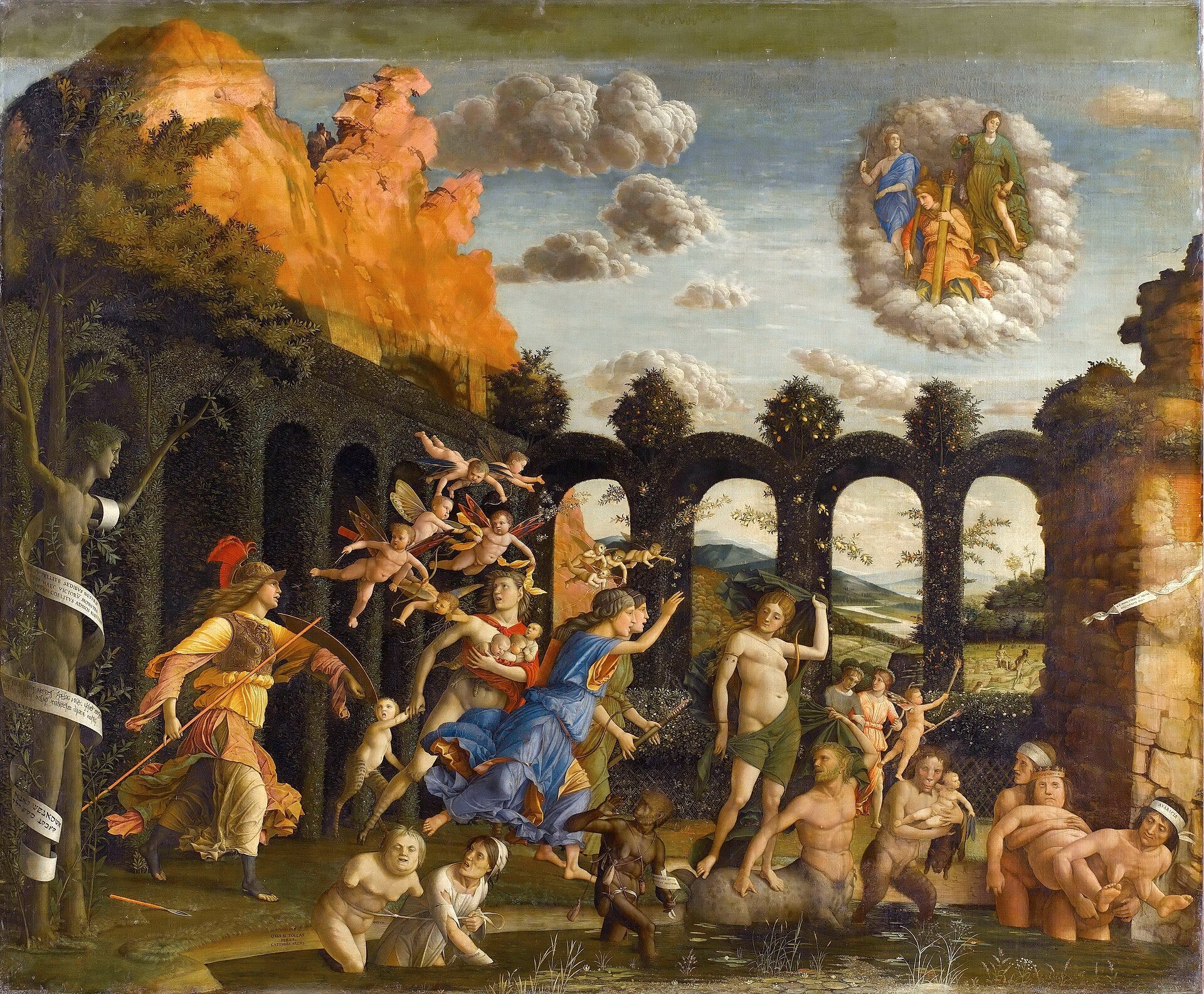
I love this from R.J. Snell: “Our modern Empire of Desire manufactures endless appetite while simultaneously denying that anything is objectively good, beautiful, or desirable. The result is not great yearning or passion, but acedia or sloth, a pervasive ‘noonday demon.’”
The empire of desire fuels our hunger for more, for counterfeits. It tells us we need to progress in order to be enough. Just look at the lie of transhumanism. Our limitations are to be transcended, broken, overcome. But that yearning is never satisfied by progress. Adam and Eve discovered that grasping to be more than they already were cost them everything: reality in God’s presence, traded for hardship, turmoil, and death.
In each case, the desire underneath is not evil. The desire is good. We should want to be more like God; Paul calls us to be “imitators of Christ.” What is evil is the disordered desire for more, the reaching for a real thing through a false door.
Augustine called this incurvatus in se, “curved in on oneself.” Seeking counterfeits is ultimately the desire for self-sufficiency. We would rather not be what we are, and so we grasp for more. But this insatiable desire for self-made fulfillment leaves us less and less satisfied with ourselves. As Augustine reminds us, our hearts find no rest until they rest in God. God alone is the real.
The Cultural Counterfeit
We live in a moment saturated with counterfeits, and they follow the same ancient logic.
Our culture tells us that the self as given, embodied, gendered, finite, creaturely, is a limitation to be overcome rather than a gift to be received. We seek to become something else in the hope that it will bring acceptance and wholeness. Incurvatus in se strikes at our hearts, and we end up lonely and isolated. Just look at the heartwrenching accounts of detransitioners. They pursue the counterfeit belief that they will be satisfied as something other than what God endowed them with, male or female, only to discover that it leads to misery, not only physically but mentally. Why? Because they were sold a counterfeit reality. The promise of something better obscured reality.
Gender is no longer understood as part of the blessing of creation but as a limiting cage. Humanity itself is increasingly framed as a problem to be solved. And this is not simply a Right or Left issue. On the Right, we see the same spirit in tech oligarchs pushing transhumanism, or in influencers promoting the idea that how God made us is not enough and that we need to bonesmash and looksmaxx our way to a better version of ourselves. In other words, we are sold the vision of a self that transcends its given nature and becomes autonomous: self-authored, self-defined, self-made, and ultimately miserable.
George MacDonald named this spirit with precision: “The one principle of hell is, ‘I am my own.’”
But notice what is being counterfeited. The longing underneath is real. The desire to be fully known, fully yourself, fully alive — that is not a disordered desire. It is a deeply human one. The tragedy is not that people want to flourish. It is that they are being sold a counterfeit path to flourishing that requires them to reject the very thing that makes flourishing possible: the truth of who and what they are.
One of Tim Keller’s most impactful works is Counterfeit Gods. It had a profound effect on my spiritual life as a young, single man. It brought me to my knees as I saw just how much I had been worshiping myself and everything else. Here’s Keller:
“When anything in life is an absolute requirement for your happiness and self-worth, it is essentially an ‘idol,’ something you are actually worshiping. When such a thing is threatened, your anger is absolute. Your anger is actually the way the idol keeps you in its service, in its chains. Therefore if you find that, despite all the efforts to forgive, your anger and bitterness cannot subside, you may need to look deeper and ask, ‘What am I defending? What is so important that I cannot live without?’ It may be that, until some inordinate desire is identified and confronted, you will not be able to master your anger.”
You see, the counterfeit takes something good and twists it into something ultimate. And you cannot become more fully yourself by dismantling what you were made to be. You cannot find liberation by rejecting the givenness of your own nature. The counterfeit always promises transcendence and delivers only a deeper captivity.
The Answer to the Counterfeit
The answer has never been to want less. We should desire to “be like God.” Instead it is to properly understand what this entails. It’s not desiring to transcend our limits. Nor is it to sit in them. Stoicism tells us to grit our teeth and endure the pain, but I’m not sure that’s going to cut it. Instead, we must want rightly, to receive what is already given rather than grasp for what is being falsely promised.
Eve already bore the image of God. Jesus was already promised the nations. We are already made with a nature and dignity that does not need to be transcended but inhabited, fully and freely, as creatures before our Creator. Sin stands between us and that Creator, but Jesus made a way. The cross undoes what the garden broke. The counterfeit is no longer our only option. We can come home to the real. To be “like God” is to follow Christ and be “imitators of God.” (Eph 5:1)
The enemy has nothing new to offer. He never has. Every temptation, ancient or modern, is a variation on the same tired lie: what you have is not enough, and what is being sold will make you whole. It won’t. It never does.
Satan never creates. He counterfeits. And a counterfeit, however convincing, is only ever worth something if you’ve forgotten what the real thing looks like. Thinking back to the opening story, we too often settle for fools gold when the real gold is in simply taking up our cross and following Jesus. It will be hard. We won't be popular. But it will be worth it. The real always outshines the counterfeit. And only in Christ do we find the self we were made to be.
Excellent! I especially like the way you emphasize that Eve already had what she was being promised by the serpent, and that Jesus already had what Satan was offering to him. Satan was acting like he owned what he was offering.
Splendid work here, Eddie. The thin film of counterfeit promises is sundered by the grace that offers something of substance, something that lasts, something that's real – namely, God himself given to us and for us in the person of his Son. Well done 👏